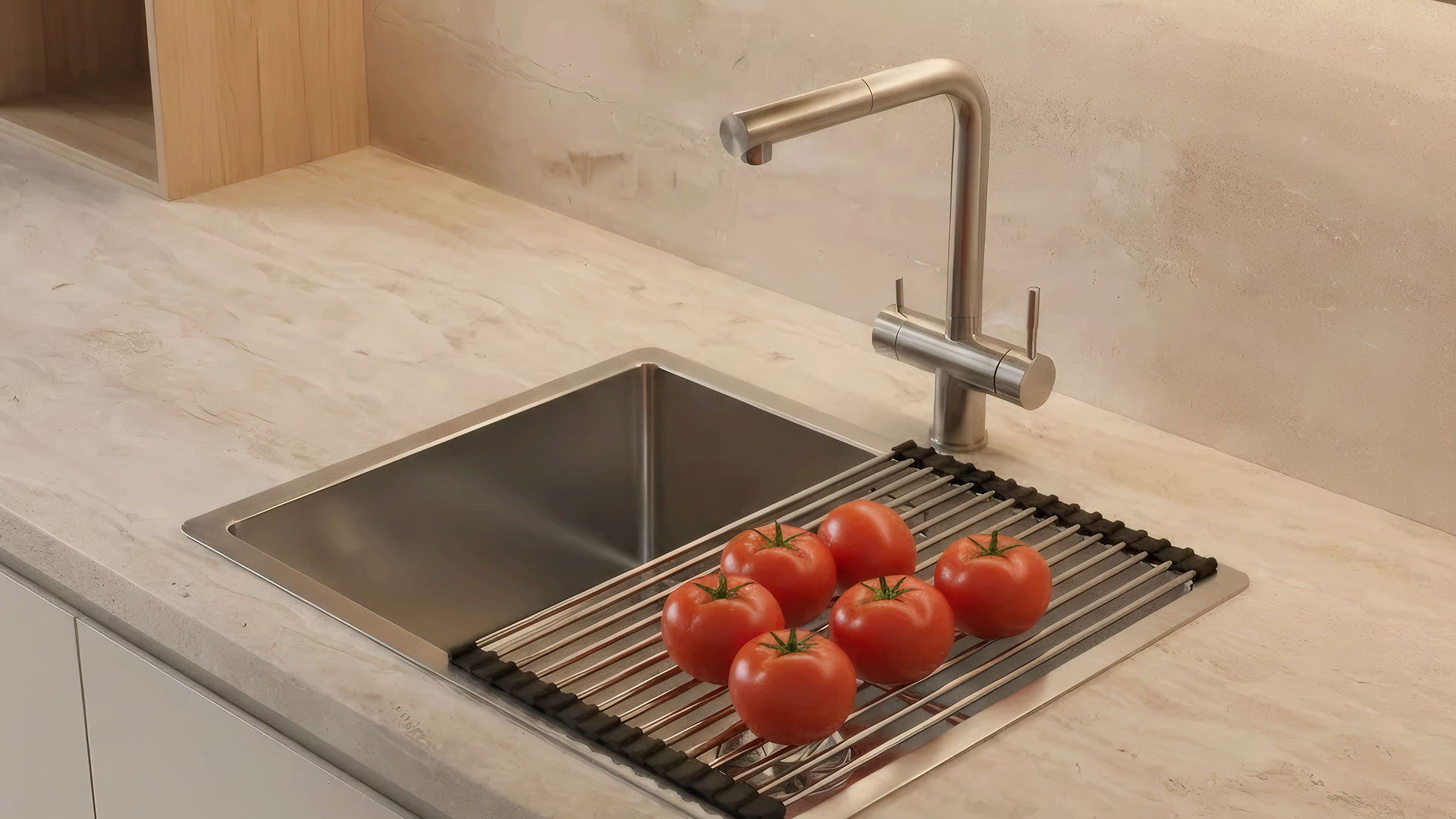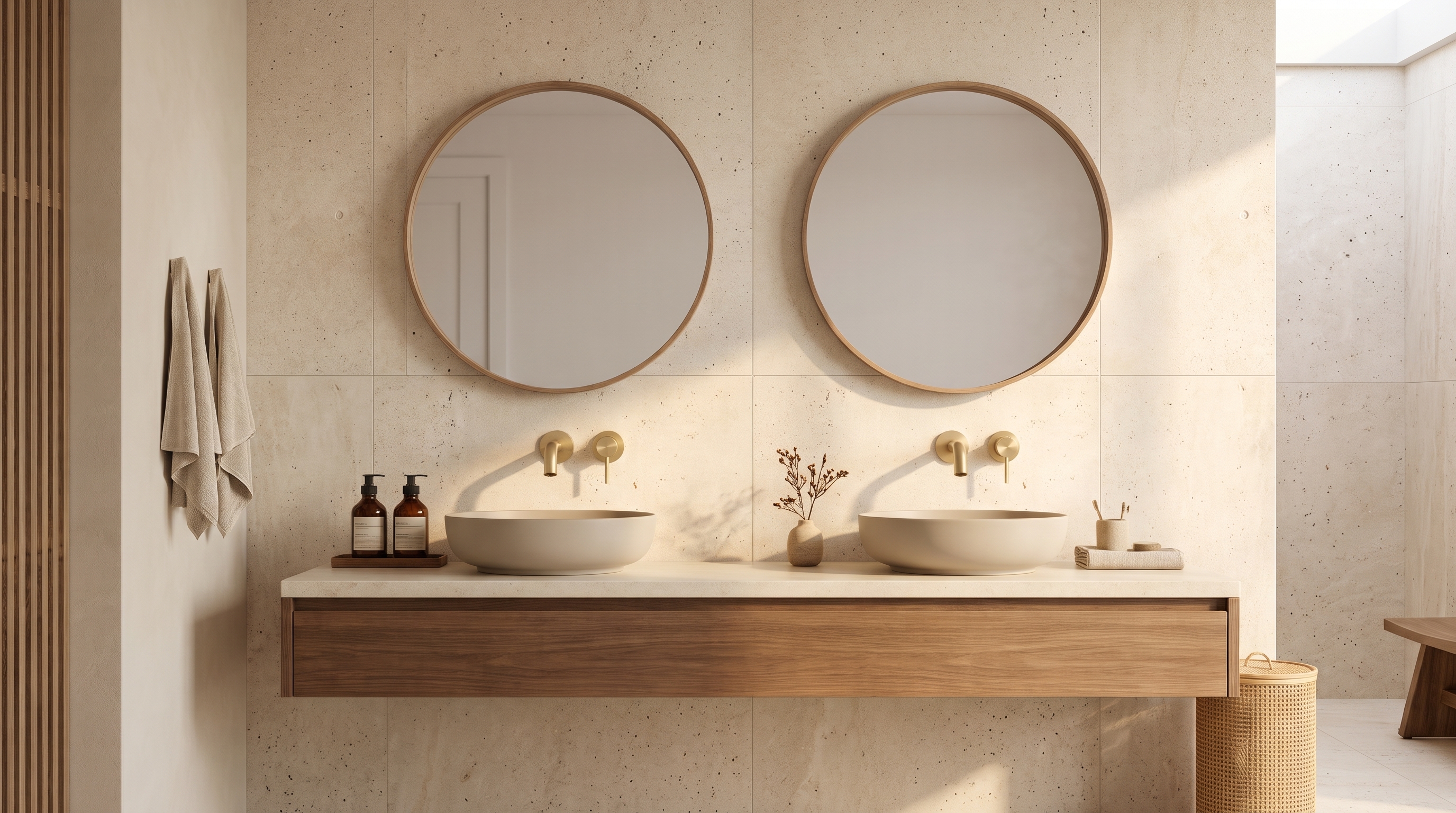
Japandi bathroom faucets are simple: a round shape, a single lever, and a matte or brushed finish. Here’s how to choose the right type and height.
Why the Faucet Is So Important
In a Japandi bathroom, there’s not much to see: soft colors, natural materials, and a few carefully chosen items. That’s exactly why the faucet stands out. You touch it every day, it sits in the center of the sink, and it determines how serene the space looks. A good Japandi faucet is therefore simple, the right size, and the same color as the rest of the bathroom.
Want to understand the whole style first? Then read our article on Japandi bathroom ideas.
What makes a faucet Japandi?
- A simple shape. A smooth cylinder or a gentle curve, without any ornamentation.
- A single lever. Fewer parts create a calmer look and are easier to use.
- A matte or brushed finish. It reflects light softly and shows fewer visible smudges than shiny metal.
- The right size. The faucet should match the sink: not too big and not too small.
- A single metal color. The same color as the shower and other metal fixtures.
What type of faucet goes well with Japandi?
| Type | Why it works | Suitable for |
|---|---|---|
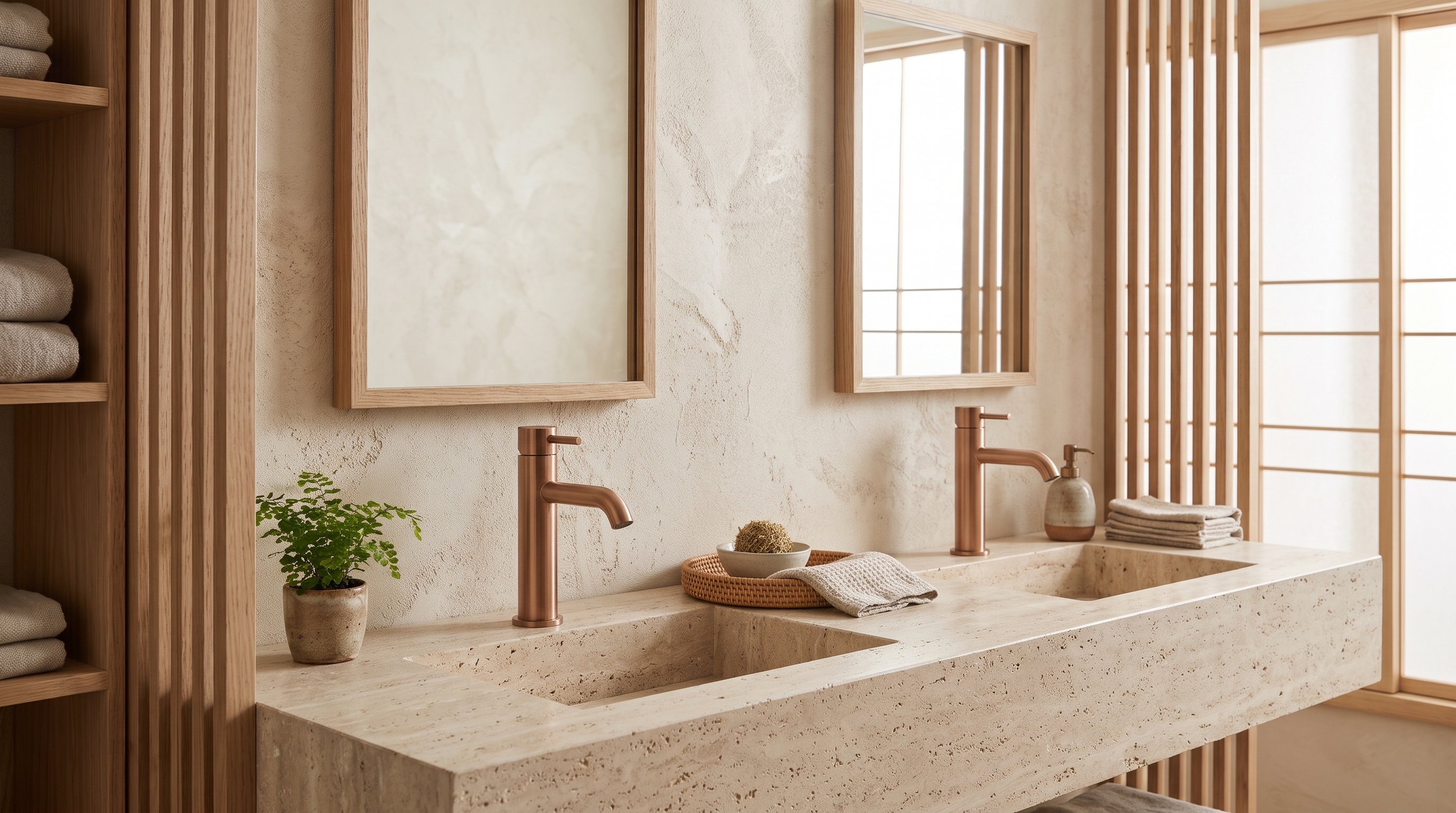
| Single-handle sink faucet | Simplest design, single lever | Most bathrooms |
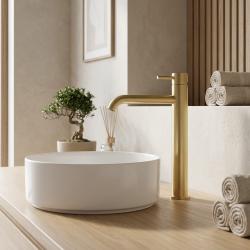
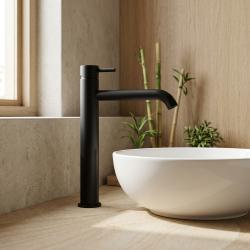
| Tall sink faucet | Clean, vertical line | Countertop sinks |
| Two-hole sink faucet | Spout and controls separate, sleek appearance | Sink or sink top with two holes |
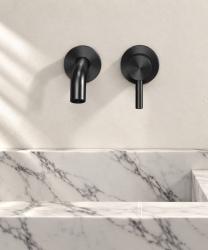
| Wall-mounted spout | The sink top remains completely unobstructed | Wall-mounted faucets with separate controls |
| Concealed sink faucet | Only the spout and controls are visible | The cleanest look—plan before tiling |
| Sink faucet (cold water) | One simple faucet, no mixing | A small guest bathroom |
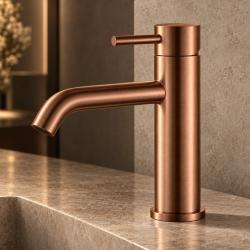
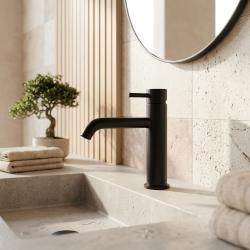
Single-handle sink faucet. This is the simplest choice and fits in almost any bathroom. A single handle controls temperature and water flow, and the design remains understated.
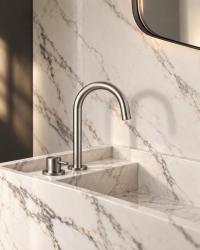
Tall sink faucet. A tall faucet is designed for a countertop sink, which sits on top of the vanity. The spout extends above the edge, making it easy to wash your hands. The slim, straight lines complement the Japandi style well.
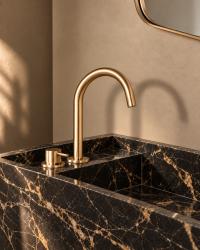
Two-hole sink faucet. With a two-hole faucet, the spout and the controls are separate. This creates a light, airy look, but your sink or countertop must be drilled with two holes. Be sure to check this before ordering.
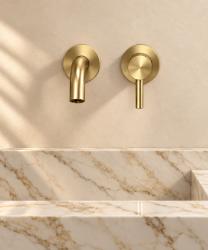
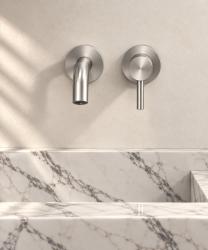
Wall-mounted spout. A wall-mounted spout leaves the countertop completely unobstructed, which fits well with the uncluttered Japandi aesthetic. The controls are separate, so the plumbing must be installed in the wall before tiling.
Built-in sink faucet. A built-in faucet is recessed into the wall, with only the spout and controls visible. This creates the most understated look. The Aquanello Eterna series offers this style in stainless steel and matte black.
Sink faucet. A cold-water faucet is a small, simple faucet with a single water supply and no hot water. It works well in a small guest bathroom.
Choosing the Right Height
The height determines how the faucet looks and how comfortably it works.
- Tall faucet for a countertop sink. The spout extends above the edge, so your hands fit easily underneath.
- Standard height for a sink that’s built into a cabinet or mounted on the wall.
- Reach is just as important as height. The water should fall in the center of the sink, not against the edge.
Check the spout height and reach on the product page and compare them to your sink before ordering. A faucet that’s too tall on a low sink will cause splashing.
How to choose the height in 3 steps
- Measure the height from the top edge of your sink.
- Choose a spout that extends well above the rim.
- Check that the water falls in the center of the sink.
Choosing the Right Faucet Color for Your Sink
Japandi sinks are often made of ceramic, natural stone, or wood. The faucet’s color should complement the material.
| Sink or Vanity | Matching faucet colors |
|---|---|
| White ceramic | All colors: Stainless steel for a calm look, matte black for contrast |
| Natural stone or travertine | Stainless steel, brushed gold, matte black |
| Light wood | Matte black, brushed copper, stainless steel |
| Dark wood | Brushed copper, brushed gold, stainless steel |
The small details
In a Japandi bathroom, the details lie in what you don’t notice, because everything fits together seamlessly. The pop-up drain plug for the sink comes in the same four colors as the faucets: stainless steel, matte black, brushed copper, and brushed gold. If you choose the same color, the sink will look polished and serene.
A Japandi Faucet in a Small Bathroom
A Japandi faucet works especially well in a small bathroom. Choose a compact single-handle faucet or a wall-mounted spout to keep the sink countertop clear, and stick to light or neutral colors. Less visible parts create a sense of calm and make the space appear larger.
Match the faucet with the shower and bathtub
Choose the same color for the sink faucet as for the shower and bathtub. This gives the entire bathroom a calm and well-thought-out look. With Aquanello Eterna, you can choose the same design in all four colors for the sink, shower, and bathtub.
Caring for a matte or brushed faucet
- Wipe down the faucet with a soft cloth after use.
- Use mild soap and warm water for cleaning.
- Avoid scouring pads and harsh cleaners, as they can damage the finish.
- Dry the faucet to prevent water splashes and limescale stains, especially on matte black finishes.
Plan Ahead Before Tiling
Wall-mounted faucets and built-in faucets require plumbing inside the wall. Therefore, consult your plumber before the walls are tiled. A faucet on the sink is much easier to replace later.
Common Mistakes
- Choosing a faucet that’s too tall for the sink, causing water to splash
- Using a different metal finish on the faucet and the stopper
- A faucet with decorative elements or a glossy finish
- Ordering a wall-mounted faucet after the walls have already been tiled
- Forgetting to check how many holes your sink or countertop has
Frequently Asked Questions
Which faucet is best suited for a Japandi bathroom?
A faucet with a simple, rounded shape, a single lever, and a matte or brushed finish. Avoid ornate designs and shiny metal.
Should I choose a single-handle faucet or a two-hole faucet?
A single-handle faucet is the simplest option and works well in most bathrooms. A two-hole faucet is suitable for a sink or countertop with two holes and has a lighter, more airy look because the spout and handle are separate.
Are wall-mounted faucets suitable for a Japandi bathroom?
Yes. A wall-mounted spout keeps the countertop clear, which fits well with the Japandi style. However, the plumbing must be planned before tiling.
What faucet height do I need?
Choose a tall faucet for a countertop sink and a standard height for a sink built into a vanity. Check the spout height and reach on the product page.
What faucet color looks best in a Japandi bathroom?
Stainless steel, matte black, brushed copper, and brushed gold all work well. Choose one color and use it for the faucet, showerhead, and drain plug.
Should I choose matte black or brushed metal?
Matte black provides contrast against light-colored walls and wood. Brushed metal has a softer feel and shows fewer smudges.
Can I use a tall faucet on a standard sink?
Only if the spout height and reach are suitable. A tall faucet can cause splashing on a low sink, so check the measurements first.
How do I keep a Japandi faucet looking its best?
Wipe it down with a soft cloth after use. Use mild soap and avoid scouring pads and harsh cleaners.
A Japandi faucet is a subtle detail. Choose a simple shape, the right height, and a single color, and let the sink and materials take center stage.